Best STEM Kit Headphones for Robotics, Coding & Maker Classrooms (K-8)

A robotics cart gets grabbed, dropped, twisted, and stuffed back in a bin thirty times a day. The headphones that live on that cart take the same abuse. In a K-8 maker space, the winning headphone is not the one with the best specs, it is the one that survives the rotation and still works in June. Two Hamilton lines are built for that reality: one bends without breaking, the other adds a student-safe volume cap.

What are the best STEM-lab headphones for K-8 robotics, coding, and maker classrooms?

The HamiltonBuhl Flex-Phones foam headphone at $21.89 is the best pick for K-8 STEM labs because durability is the whole problem in a shared maker space. Its flexible, virtually indestructible foam headband bends and twists instead of snapping, which is exactly what survives a 30-student daily rotation and rough return to the bin. It is wired with a standard 3.5mm plug, so there is no charging, pairing, or dead-battery downtime during a robotics block. The Hamilton SC-7V at $12.29 is the strong value alternative: a rugged over-ear headphone that adds built-in volume control to help protect younger students' hearing, at a lower per-unit price. For maximum survivability choose the Flex-Phones; for the lowest cost with a volume cap choose the SC-7V. Both are PO-ready from Encore Data Products at 866-926-1669.

2 Tools Compared

Tool / Business / Provider Score Speed / Distance Pricing / Details Rating
Top Choice
96%
Wired 3.5mm $21.89 ★★★★★
89%
Wired 3.5mm $12.29 ★★★★☆

HamiltonBuhl Flex-Phones

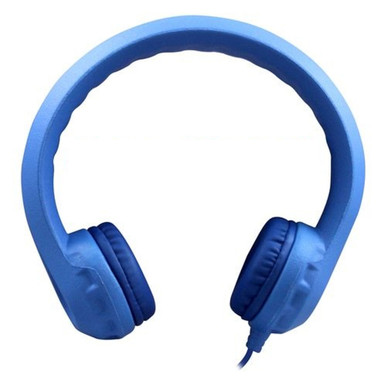
The HamiltonBuhl Flex-Phones is a foam-bodied over-ear headphone built for the roughest classroom use, which makes it the right headphone for a K-8 robotics or maker cart. The flexible foam headband twists and bends without cracking, so it takes the drops, grabs, and shove-back-in-the-bin handling that destroys rigid plastic headphones over a 30-student rotation. It is wired with a standard 3.5mm plug, so there is nothing to charge and no pairing to fail mid-lesson. At $21.89 from Encore Data Products, it costs more up front than a basic headphone but earns it back by not needing constant replacement.

  • Flexible, virtually indestructible foam build that bends instead of snapping.
  • Over-ear foam cushions are lightweight and comfortable for young students.
  • Wired 3.5mm plug: no charging, no pairing, no dead-battery downtime.
  • Built for a 30-student daily rotation and rough bin storage.
  • Comes in blue for easy identification on a shared STEM cart.

For a coding lab or robotics cart where headphones get abused daily, the Flex-Phones is the survivability pick, and the reduced replacement cycle usually justifies the higher unit price.

Read More : https://www.encoredataproducts.com/over-ear-headphones/hamiltonbuhl-flex-phones-stereo-foam-headphones-blue/
Pros
  • Flexible foam body bends and twists instead of snapping under rough handling. High
  • Wired 3.5mm plug means no charging, pairing, or dead-battery downtime. High
  • Lightweight foam cushions are comfortable for K-8 students. Medium
  • Durability lowers the replacement cycle across a 30-student rotation. Medium
Cons
  • Higher per-unit price than a basic classroom headphone. High
  • No inline volume limiting; manage volume at the device. Medium

Hamilton SC-7V

The Hamilton SC-7V SchoolMate Deluxe is a rugged over-ear headphone with built-in volume control at $12.29, which makes it the value pick for a K-8 STEM lab. The V adds a hardware volume cap that limits maximum output to help protect younger students' hearing, without relying on a device setting a student can change. It is wired with a 3.5mm plug, so it shares the no-charging, no-pairing reliability that a robotics block needs. It is not as crush-proof as the foam Flex-Phones, but it holds up well to normal classroom use at roughly half the price.

  • Built-in volume control caps output for student hearing safety.
  • Durable over-ear SchoolMate Deluxe build for everyday lab use.
  • Wired 3.5mm plug: no charging or pairing to manage.
  • $12.29 per unit, the lower-cost option of the two.

Choose the SC-7V when you want the volume cap and the lowest per-unit price, and reserve the Flex-Phones for the carts that take the most abuse.

Read More : https://www.encoredataproducts.com/over-ear-headphones/hamilton-sc-7v-schoolmate-deluxe-stereo-headphone-with-3.5mm-and-volume/
Pros
  • Built-in volume cap protects younger students' hearing in hardware. High
  • Lower per-unit price at $12.29 for outfitting a full lab. High
Cons
  • Not as crush-proof as the foam Flex-Phones for the roughest carts. Medium
  • No microphone; audio playback only. Low
Hamilton SC-7V

Hamilton SC-7V

Rugged over-ear value with a built-in volume cap

$12.29
Per Unit
Yes
Volume Limit
3.5mm
Plug

Hamilton SC-7V

Rugged over-ear value with a built-in volume cap

The SC-7V is not the lesser headphone in every sense; it actually adds a feature the Flex-Phones lacks, a built-in volume cap, and it costs about half as much. It ranks second here only because this article is about surviving a rough robotics-cart rotation, and the flexible foam Flex-Phones wins that specific durability test. If hearing-safety volume limiting and lowest cost matter more to your lab than maximum crush resistance, the SC-7V is the better buy.

HamiltonBuhl Flex-Phones

HamiltonBuhl Flex-Phones: Virtually indestructible foam that bends instead of breaking

$21.89
Per Unit
Foam
Build
3.5mm
Plug
Shop the Flex-Phones

Outfitting Your K-8 STEM Lab

In a robotics, coding, or maker classroom, the headphone that wins is the one still working after a year of being grabbed, dropped, and jammed back in a bin. The HamiltonBuhl Flex-Phones at $21.89 is built for exactly that, with a flexible foam body that bends instead of breaking and a wired 3.5mm plug that never needs charging during a lab block. Spend a little more up front and replace far fewer headphones.

If you want a hardware volume cap for younger students and the lowest per-unit price, the Hamilton SC-7V at $12.29 is the value alternative, and many schools mix both, putting Flex-Phones on the roughest carts and SC-7V units everywhere else. Encore Data Products accepts school and district purchase orders; call 866-926-1669 for volume pricing.

Frequently Asked Questions

The Flex-Phones uses a flexible, virtually indestructible foam body that bends and twists instead of cracking. In a shared STEM cart that gets grabbed and dropped by 30 students a day, that durability is what keeps the headphone working all year, which is why it wins for maker and robotics classrooms at $21.89.
Wired 3.5mm headphones like the Flex-Phones and SC-7V have nothing to charge and nothing to pair, so there is no dead-battery or connection downtime in the middle of a robotics or coding block. For a shared cart used all day, that reliability matters more than cutting the cord.
The Hamilton SC-7V has a built-in hardware volume cap that limits maximum output to help protect hearing, at $12.29. The Flex-Phones does not include inline volume limiting, so with it you would manage volume at the device. If a hardware cap is a priority, choose the SC-7V.
The HamiltonBuhl Flex-Phones is $21.89 and the Hamilton SC-7V is $12.29 at Encore Data Products. The Flex-Phones costs more but its durability lowers the replacement cycle; the SC-7V is the lower-cost option and adds a volume cap.
Yes, and many schools do. Put the more durable Flex-Phones on the roughest robotics and maker carts, and use the lower-cost SC-7V with its volume cap in coding stations and general labs. Both are wired 3.5mm and PO-ready from Encore.

Useful Resources